A Destination Protected by the World
Antarctica is unlike any other place on Earth. It does not belong to one nation. Instead, countries work together through the Antarctic Treaty System to protect the continent for peace, science, and future generations.
Environmental rules guide how people visit, work, and conduct research there. Mining is prohibited, wildlife is protected, and many landing sites have specific guidelines to reduce human impact.
This international cooperation makes Antarctica one of the clearest examples of what can happen when the world chooses protection over exploitation.
Responsible Tourism in Action
In Antarctica, sustainability is not just a promise. Travelers see it in action every day.
Before going ashore, visitors attend detailed briefings. Boots, clothing, and equipment are carefully cleaned to prevent seeds, soil, or other materials from reaching the continent. Guests must keep a safe distance from wildlife, stay on approved paths, and leave every location exactly as they found it.
Ship size
Landings are also controlled, with limits on the number of visitors allowed ashore at one time.
Expedition vessels carrying fewer than 200 passengers may land guests, but never more than 100 ashore at any single site at any one time, with a guide-to-guest ratio of at least 1:20. Vessels carrying 200 to 500 passengers face tighter restrictions again, and any ship carrying more than 500 passengers is barred from landing altogether.
Also, expedition guides help protect sensitive areas while teaching guests how to explore with care.
Cleaner Fuel
Since 2011, ships have been prohibited from carrying or burning heavy fuel oil anywhere in Antarctic waters, a rule later folded into the International Maritime Organization’s mandatory Polar Code.
Eco-Friendly Antarctic Adventures
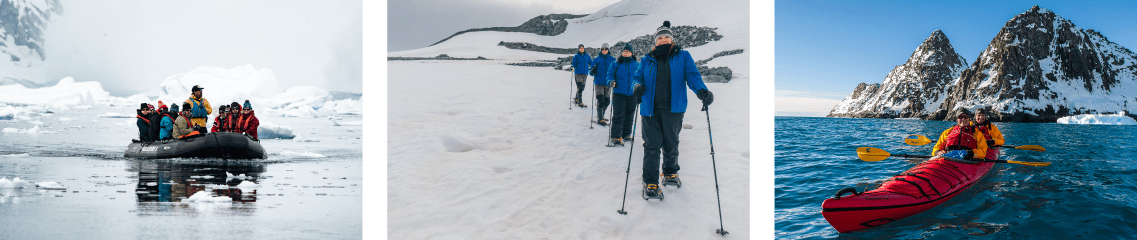
Travelers to the White Continent can enjoy incredible, low-impact activities led by expert naturalists:
- Zodiac Boat Excursions: Sail quietly past floating ice formations to spot sleeping seals and swimming penguins up close.
- Snowshoeing & Ice Camping: Walk across pristine snowfields or spend a magical, quiet night under the polar sky.
- Sea Kayaking: Glide through crystal-clear frozen waters alongside gentle marine life with zero noise pollution.
Many expedition operators build citizen science into the daily program. It allows guests to become contributors, not just observers. Travelers can collect samples or photograph the wildlife to contribute to research projects and databases. - Air-Cruise Options: Take a direct flight over the Drake Passage to reduce travel time and support small-scale, fuel-efficient operations.
Tips & Recommendations
- Best Time to Travel: Due to extreme polar weather, the Antarctic travel season runs only during the southern summer from November to March. Early season (November) offers fresh snow and huge icebergs, while late season (February–March) provides the absolute best whale-watching opportunities.
- Always schedule pre-tour and post-tour nights in gateway cities like Ushuaia (Argentina) or Punta Arenas (Chile). Weather can change quickly, so flexible flight tickets are essential.
- Ensure your clients purchase comprehensive travel insurance that includes emergency medical evacuation.
- It is recommended to select modern vessels equipped with X-bow designs, low-emission engines, and strict carbon-offset initiatives.
Antarctica is more than a destination to check off a list. It is a place that reminds travelers how stunning, fragile, and connected our world truly is.
Recommending a responsible Antarctic expedition means an extraordinary adventure that encourages conservation of the environment.
Contact our team to help select responsible expedition cruises, seasonal departures, and unforgettable Antarctic experiences.
Published in July 2026